


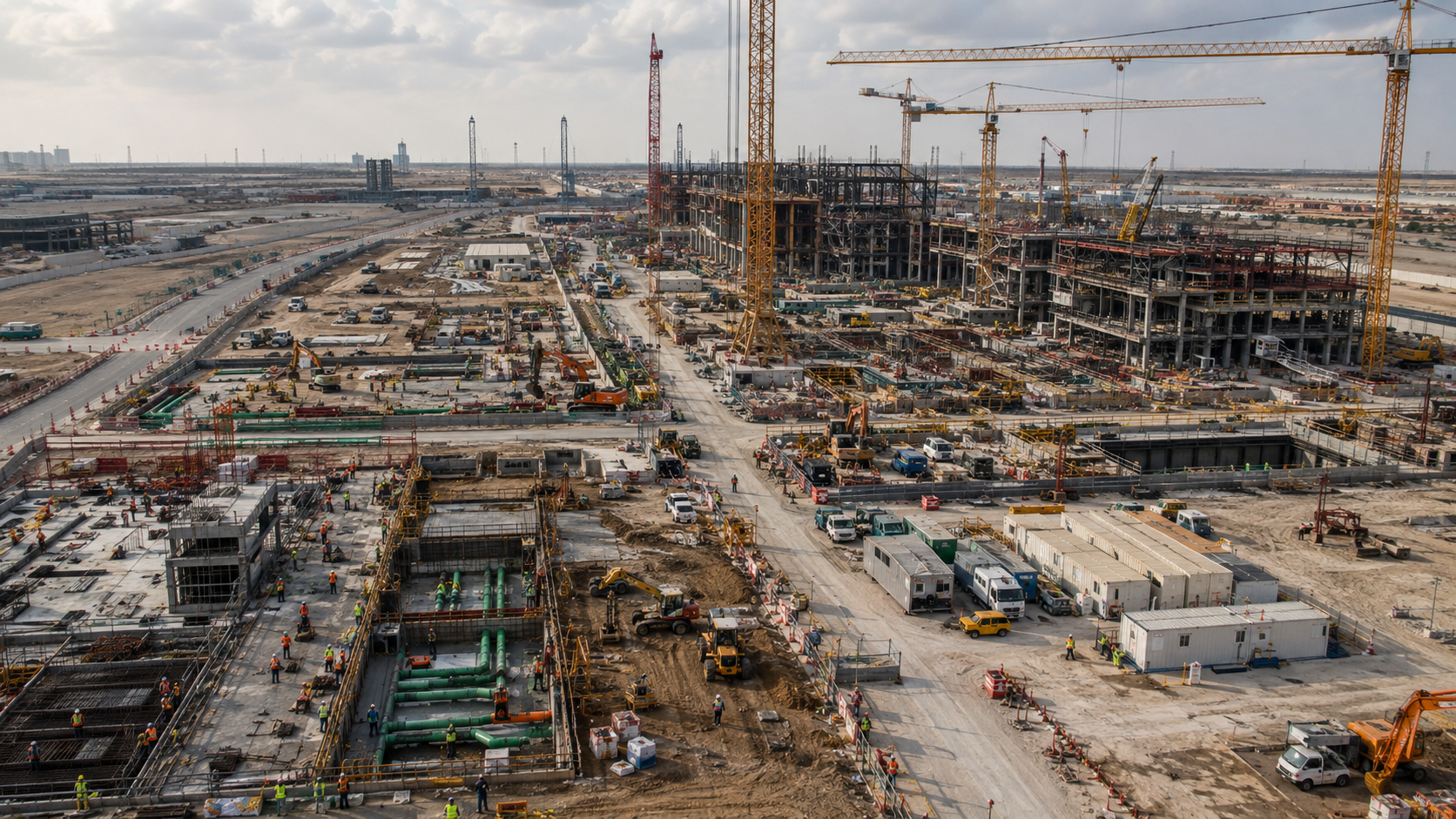
A concise look at why mega and giga projects often fail at the interfaces between teams, contracts, scope, risk, and stakeholders—and how better coordination, visibility, and decision-making can prevent costly delays, claims, and rework.
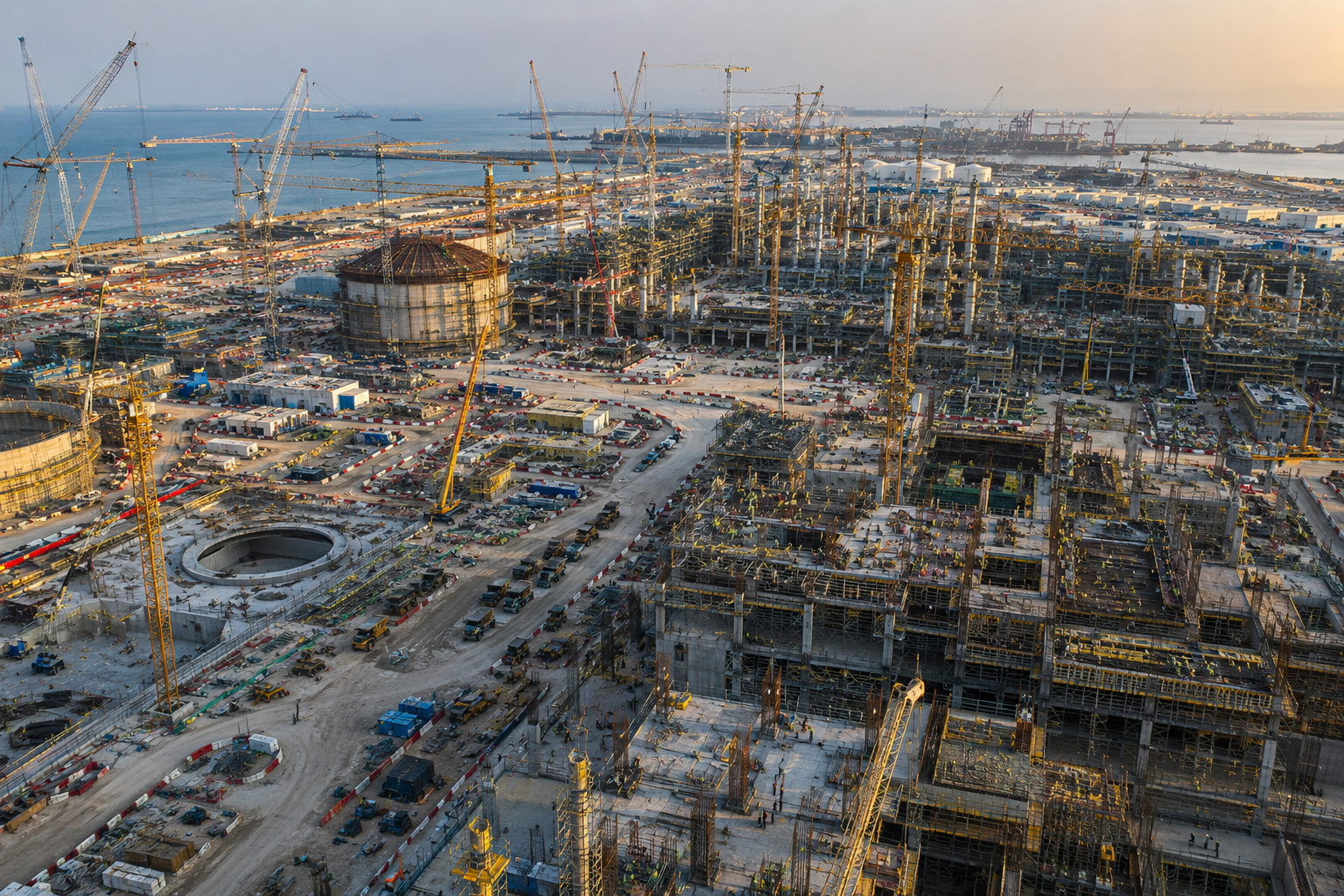
Mega and giga projects rarely collapse because one engineer made one catastrophic mistake.
More often, failure develops quietly.
A design decision is not communicated to procurement.
A contractor assumes something belongs to another package.
A risk is recorded but never assigned.
A verbal instruction becomes construction work before commercial approval.
A stakeholder who appeared unimportant suddenly gains enough influence to stop the project.
Individually, these issues may look manageable.
Collectively, they can create months of delay, millions in additional cost, claims, disputes, rework, and damaged relationships.
After decades of working around major construction projects, one lesson stands above many others:
The most dangerous areas of a complex project are often not inside the work packages. They are between them.
The Interface Problem
Consider a simple example.
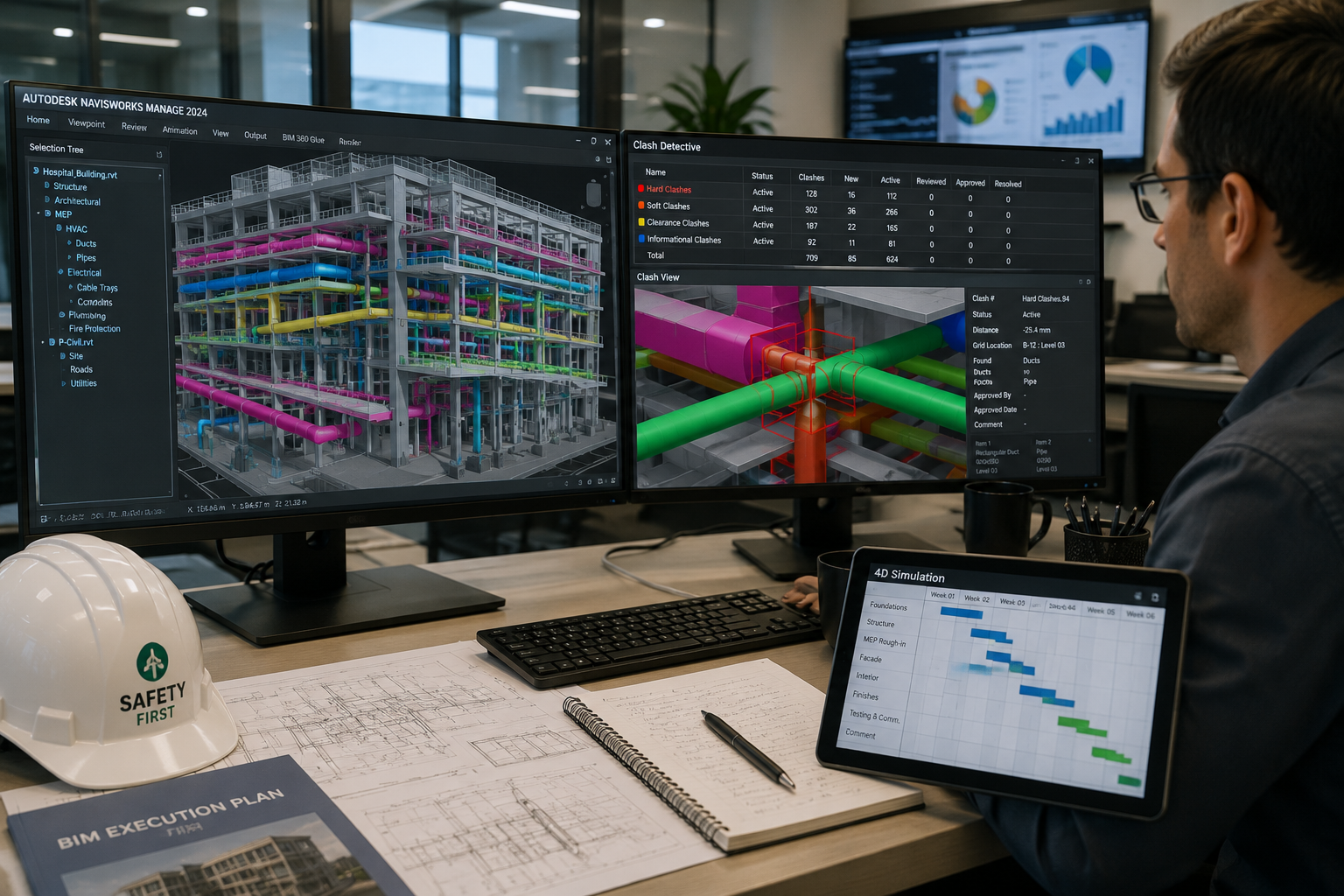
The structural contractor provides openings for mechanical services. The MEP contractor provides the equipment dimensions. The designer approves the routing. Procurement selects the final equipment.
Every company may execute its own scope correctly.
But what happens if the final equipment dimensions change and that information does not reach the structural contractor before concrete is poured?
Technically, everyone may claim they performed their responsibilities.
Operationally, the project still has a problem.
That is an interface failure.
On small projects, experienced individuals can sometimes manage interfaces informally.
On mega and giga projects, that approach becomes dangerous.
Hundreds of organizations, thousands of deliverables, multiple design packages, different contracts, government authorities, suppliers, operators, consultants and contractors create thousands of points where information, responsibility or physical work must cross organizational boundaries.
Those boundaries must be managed deliberately.

Scope Clarity Is Not Enough
Project teams spend enormous effort defining scope.
That is necessary—but not sufficient.
A well-written scope can describe what Contractor A must deliver and what Contractor B must deliver while still failing to define what happens between A and B.
For every major interface, teams should be able to answer five simple questions:
What exactly must be exchanged?
Who provides it?
Who receives and approves it?
When is it required?
What happens if the requirement changes?
If those questions cannot be answered clearly, the project is carrying interface risk whether the risk register recognizes it or not.
The Most Expensive Sentence in Construction
One sentence should immediately worry any project manager:
“I thought they were doing it.”
It normally appears after something has already gone wrong.
The designer thought the contractor was coordinating it.
The main contractor thought the specialist subcontractor included it.
The supplier thought the owner would provide the connection.
The owner thought it was included in the contractor's lump sum.
This is where technical uncertainty quickly becomes commercial disagreement.
What started as an interface problem can become a scope dispute, change order, claim or schedule delay.
The solution is not simply more meetings.
The solution is clear ownership supported by documented agreements and disciplined follow-up.
Change Must Be Managed Before It Reaches the Site
Change itself is not necessarily bad.
Some changes improve safety, constructability, performance or whole-life value.
The problem is uncontrolled change.
A project team hears:
“It is only a small modification.”
But a small modification to one discipline can create major consequences elsewhere.
Changing the location of equipment may affect foundations, electrical loads, fire protection, access, commissioning, maintenance clearances, procurement and schedule.
This is why mature project teams do not evaluate changes only by asking:
“How much does this item cost?”
They ask:
“What does this change touch?”
The earlier that question is asked, the greater the team's ability to respond without major disruption.
Once construction is advanced, options decrease while the cost of change increases dramatically.
Risk Registers Do Not Manage Risk
Many projects have impressive risk registers.
Some contain hundreds of risks.
That does not mean risk is being managed.
A risk register becomes useful only when it drives decisions.
A meaningful risk should have:
“Monitor the risk” is not a strategy.
Neither is discussing the same risk every month while its probability steadily increases.
The purpose of risk management is not to document what might go wrong.
It is to change what the project team does before it goes wrong.
Contracts Cannot Replace Collaboration
Contracts are essential.
They establish obligations, allocate risk, define commercial mechanisms and provide procedures when disagreements occur.
But no contract can successfully manage a complex construction project by itself.
A contract tells parties what they are obligated to do.
The project management system must determine how thousands of daily interactions actually happen.
Strong projects therefore combine contractual discipline with operational collaboration.
That includes:
The objective is not to eliminate disagreement.
That is unrealistic.
The objective is to prevent disagreement from becoming disruption.
Stakeholders Can Change the Project Without Touching the Design
Construction professionals naturally concentrate on drawings, schedules, quantities and contracts.
But some of the greatest project risks sit outside those documents.
Government entities, local communities, environmental organizations, utilities, operators, investors and other stakeholders may significantly affect the project.
Their influence can also change over time.
A stakeholder with little influence during design may become extremely powerful during permitting or construction.
That is why stakeholder management should never be completed once and forgotten.
Project teams need to continuously reassess:
Who has power?
Who has interest?
Who can influence a decision?
Who could delay the project?
Whose support will become critical during the next phase?
Ignoring these questions until opposition appears is usually far more expensive than managing engagement early.
The Best Project Teams Make Problems Visible Early
Weak project cultures hide problems.
Strong project cultures expose them.
That distinction matters enormously.
When people fear blame, they delay reporting bad news.
When bad news is delayed, management loses options.
A mature construction organization creates an environment where an engineer can say:
“We have a problem.”
And management responds:
“Good. We know about it early enough to do something.”
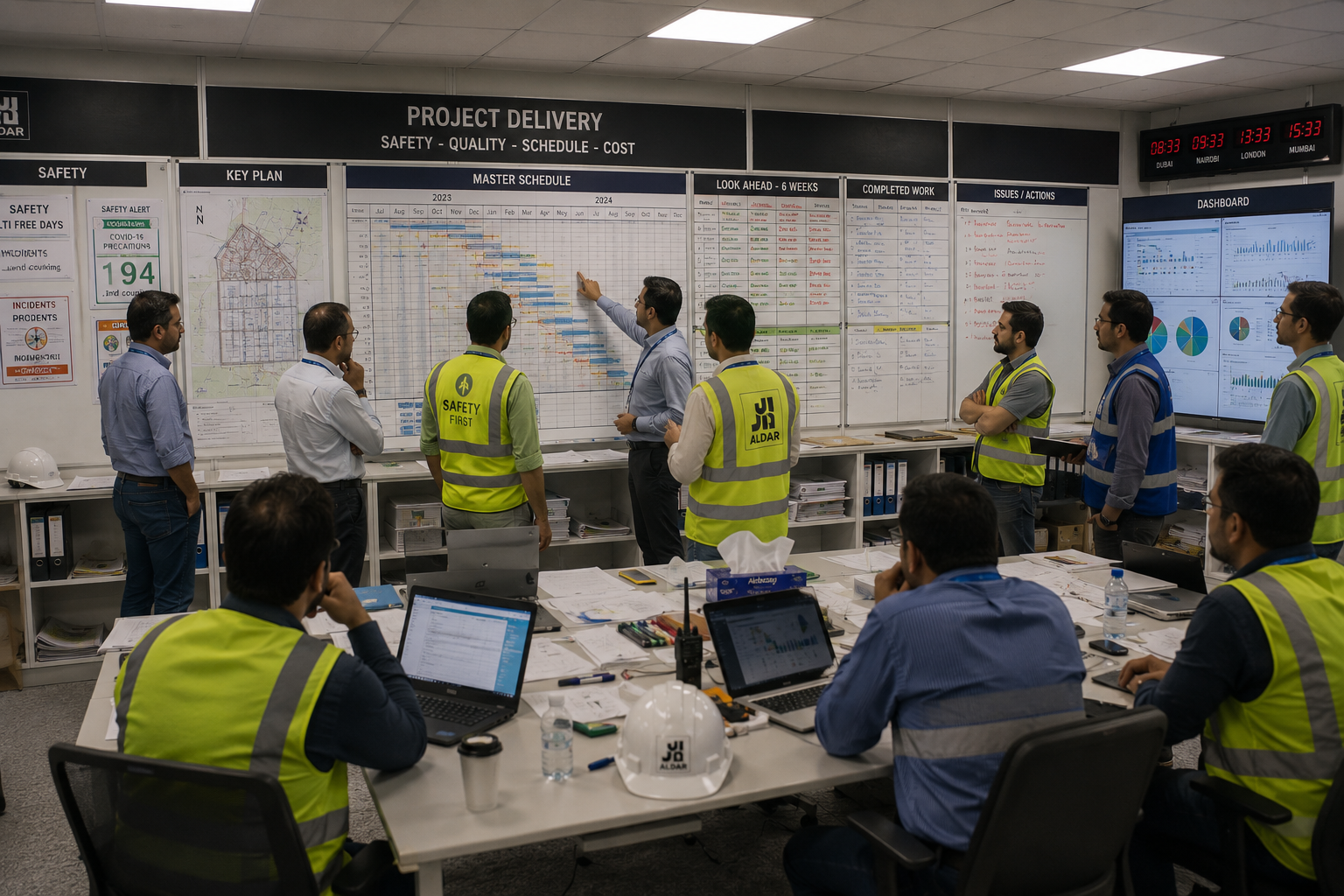
Visual management environments, structured coordination meetings, shared information platforms and clear escalation processes can all help.
But technology is not the real solution.
The real solution is a culture in which information moves faster than the problem.
The Real Skill Behind Successful Mega Projects
Mega projects require exceptional technical knowledge.
But technical excellence alone does not guarantee project success.
The professionals who become most valuable are often those capable of connecting disciplines:
Engineering with contracts.
Scope with schedule.
Risk with decision-making.
Stakeholders with strategy.
Design with construction.
Construction with operations.
And one contractor with another.
They understand that their responsibility does not stop at the edge of their individual work package.
Because major projects are systems.
And systems usually fail at their connections.
Final Thought
When reviewing your next project, do not only ask:
“Is every package properly managed?”
Ask:
“Who is managing everything between the packages?”
That question may reveal more about the health of your project than another hundred pages of progress reporting.

Link copied
Rate this post
Please log in to rate and comment. Login
Please log in to rate and comment. Login




No courses found.
0 Comments
No comments yet.